
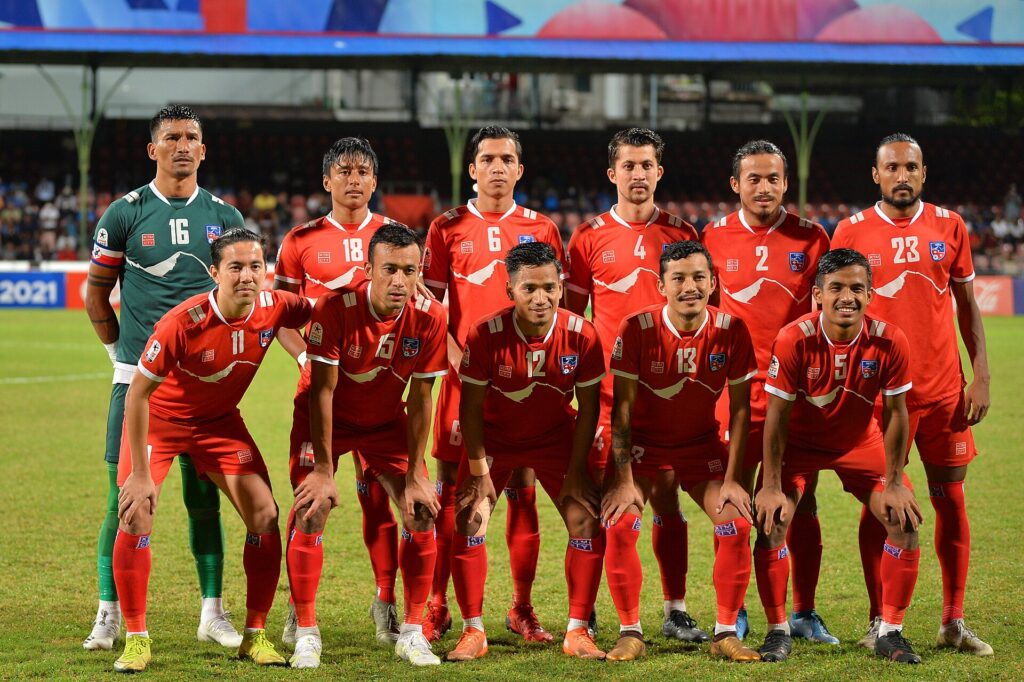
It began in Lahore. The SAARC Gold Cup that became the SAFF Championship kicked off there in 1993, a tournament Pakistan staged into existence before there even was a South Asian Football Federation to run it. Three decades later, the honours board is unambiguous: India have nine titles, seven clear of the second-most successful side, Maldives.
The distance is measured in finals, but it traces to choices. The regional calendar that South Asia built, the competitions it never managed to start, and the forks Pakistan took long before SAFF existed — those are the places the gap opened.
Lahore was the starting line, not the finish
The championship Pakistan launched in 1993 in Lahore grew into the region’s reference point. SAFF itself would only be incorporated in 1997, with Bangladesh, India, Maldives, Nepal, Pakistan and Sri Lanka as founding members, later joined by Bhutan in 2000. Afghanistan appeared from 2005 and left in 2015 to join Central Asia.
Held approximately every two years, the SAFF Championship has had its interruptions — a postponement from October 2001 to January 2002 because the Bangladesh Football Federation was suspended, with the event eventually staged in 2003, and a twice-delayed 2021 edition during COVID-19. Through that churn, one constant: India’s haul of nine titles, seven more than Maldives. That is not a run, it is a structure.
Before SAFF, Pakistan’s ceiling was higher than today’s floor
Pakistan entered FIFA in 1948 and the AFC in 1954; the national team’s first official match came in Tehran on 27 October 1950, a 1–5 defeat to Iran with Abdul Wahid Durrani scoring Pakistan’s goal. The tour logged more football than a scoreline suggests: a 1–6 loss to Tehran’s Taj, a 2–2 draw in Isfahan, and a 1–1 in Iraq against Al-Haras Al-Malaki when a full Iraqi national side could not be gathered.
Two years later, Pakistan were joint champions of the Asian Quadrangular — the trophy literally split by coin toss for six months — and played Iran to a goalless draw at home. At the 1954 Asian Games in Manila, Masood Fakhri became the first Pakistani to score an international hat-trick as Singapore were beaten 6–2. Those are not museum pieces; they are benchmarks.
There were decisions, too. Pakistan helped found the AFC in May 1954, then withdrew from the 1956 Asian Cup qualifiers alongside Afghanistan, unwilling to host Israel. When they did enter the 1960 Asian Cup qualifiers in Kerala, the results were not romanticised memories but hard wins: 4–1 over Iran, 1–0 over India, a 2–2 draw with Israel, and third in the group ahead of hosts India. The early 1960s Merdeka Cups added a 7–0 over Thailand, 3–1 over Japan, and a 1962 final lost 1–2 to Singapore.
China toured in 1963: 0–0 in Dhaka, 3–2 to Pakistan in Peshawar, 1–1 in Lahore, and a 0–2 loss in Karachi. The 1964 Olympic qualifiers split a 1–4 loss in Iran and a 1–0 win at home; that same year Pakistan beat the China national team 2–0 away. The palette remained mixed at the decade’s end: third at the 1965 RCD Cup; a 1967 four-match series with Saudi Arabia shared a win, a loss, and two draws; the 1969 Friendship Cup produced a 2–1 over Iraq and a 1–9 against Iran. Even the 1973 tour to the Far East, heavy 4–7 defeat to China and all, spoke to an appetite for fixtures.
A regional tournament Pakistan birthed, others shaped
The SAFF Championship is the one South Asian men’s senior competition that keeps coming around. Pakistan’s most indelible mark on its origin is the venue for its first kick. After that, the continent’s ledger tells the story: India top the title count by distance; Maldives are next. Pakistan’s own claim to sustained progress has never come from major tournaments beyond South Asia — the national team has never qualified for one — so the subcontinental calendar is the practical yardstick.
When that yardstick shows a pattern over decades, it’s not about talent pools; it is about being present, again and again, in the only tournament the region reliably runs.
The club tournament that never arrived — until it was announced again
In April 2011, SAFF said it would launch a Club Championship in Bangladesh that September. It was postponed. The idea resurfaced in July 2013; accusations followed that India, the prime nation in the competition, were not altogether interested in taking part. Sri Lanka was tabled as host for August 2014. A new possible start of December 2016 became 2017, then 2018.
Nothing kicked a ball. Only in January 2025 did SAFF return with a package: the SAFF Club Championship, a SAFF Women’s Club Championship and a SAFF U-23 Championship, alongside a deal with Sportfive to fund the men’s, women’s, U-23 and club competitions. If the region lacked a cross-border club platform for a decade and a half, it was not for lack of announcements; it was the absence of a start.
| Year/Date | Decision or event |
|---|---|
| 1993 | SAARC Gold Cup (later SAFF Championship) kicks off in Lahore |
| 1997 | SAFF incorporated; Bangladesh, India, Maldives, Nepal, Pakistan, Sri Lanka as members |
| 2000 | Bhutan joins SAFF |
| 2001–2003 | SAFF Championship postponed from Oct 2001 to Jan 2002 due to BFF suspension; finally held in 2003 |
| 2005–2015 | Afghanistan joins SAFF (2005) and leaves to CAFA (2015) |
| 2011 | SAFF announces Club Championship for Sept in Bangladesh |
| 2013–2018 | Repeated Club Championship start-date changes; accusations India not keen; no kick-off |
| 2021 | SAFF Championship postponed twice due to COVID-19 |
| Jan 2025 | SAFF announces Club, Women’s Club and U-23 Championships; Sportfive to fund competitions |
What changed in 2025 — and what it asks of Pakistan
Since 2025, Sportfive has been involved in the SAFF Championship and is tied to funding the new men’s, women’s, U-23 and club competitions SAFF announced in January that year. On paper, that is a structural answer to 2011–2018’s drift: line up the money so the tournaments can exist.
For Pakistan, the significance is straightforward. The national team’s record shows no qualification for a major tournament outside South Asia; the regional calendar is not a luxury, it is the pathway. The moment SAFF’s competitions move from projection to matchdays, the only decision that matters is whether Pakistan are there, always.
The deeper cut
The stop–start economics of a regional club competition
When SAFF first floated a Club Championship in April 2011 for 1–15 September in Bangladesh, it created a planning window for clubs: pre-season timing, travel costs, squad registration. Every subsequent change — Sri Lanka touted as 2014 host, then a move to a possible December 2016 start, then 2017, then 2018 — burned credibility with the exact actors a cross-border competition relies on: airlines, broadcasters, and clubs aligning domestic calendars. Accusations in 2013 that India were not altogether interested in participating mattered because without India, the commercial floor falls out. You can stage a tournament for pride; you cannot sell it at scale without the market leader. The 2025 reset is different in one precise way: SAFF tied the new Club Championship (and its Women’s Club and U-23 counterparts) to a funding partner, Sportfive. That does not magic a schedule into being, but it answers the first question any potential host FA, broadcaster or club will ask: who pays what, and when? In a region where the senior men’s tournament itself has been postponed by a federation suspension and a pandemic, financing clarity is the difference between a launch date and another press release.
The old forks still point forward
Pakistan’s history records both capacity and reluctance. Founding the AFC in May 1954 sits on the same page as the decision to withdraw from the 1956 Asian Cup qualifiers rather than host Israel. The 1960 qualifiers in Kerala produced a 4–1 over Iran and a 1–0 over India; the 1962 Merdeka run ended one goal short. The pattern is not talent versus no talent. It is whether you put your team into the tournament and keep them there across cycles.
SAFF’s record sharpens that into the present tense. The senior men’s championship returns roughly every two years; India’s nine titles show what relentless presence becomes over time. Pakistan’s only objective measure beyond friendlies and one-off invitations is this regional platform. It started in Lahore; the question now is not who lit the first match, but who turns up for every one that follows.
What we can’t fix to a number
SAFF’s 2025 announcements set out competitions — Club, Women’s Club, U-23 — and the funding partner attached. They did not, by definition at the moment of announcement, produce fixtures, formats or results. The gap that can be charted rests on the competitions that have actually been played and recorded: the men’s senior championship from Lahore 1993 onward, with India’s nine titles and Maldives next on the list. Beyond that, until balls roll, there is nothing to count.
The neighbour’s ledger, the local decision
India’s dominance needs no embroidery; nine titles with the field chasing. Maldives in second place underlines that SAFF is not a one-team exhibition. Bangladesh and Nepal were on the same starting line as Pakistan when SAFF formed in 1997 and when Lahore hosted in 1993. The difference a generation on is not mystical. It is a function of the tournaments the region has actually staged and the choices national associations made about entering, withdrawing, or waiting on competitions that never quite began.
Sources: South Asian Football Federation (en.wikipedia.org); SAFF Championship (en.wikipedia.org); Pakistan national football team (en.wikipedia.org)
Images: Cover: The President's Office, Maldives / Wikimedia Commons (CC BY 4.0); Figure 1: Ramon FVelasquez / Wikimedia Commons (CC BY-SA 3.0)

Mohsin is a Founder & Chief Editor of footballer.pk